Active Aero in F1 2026: Everything You Need to Know
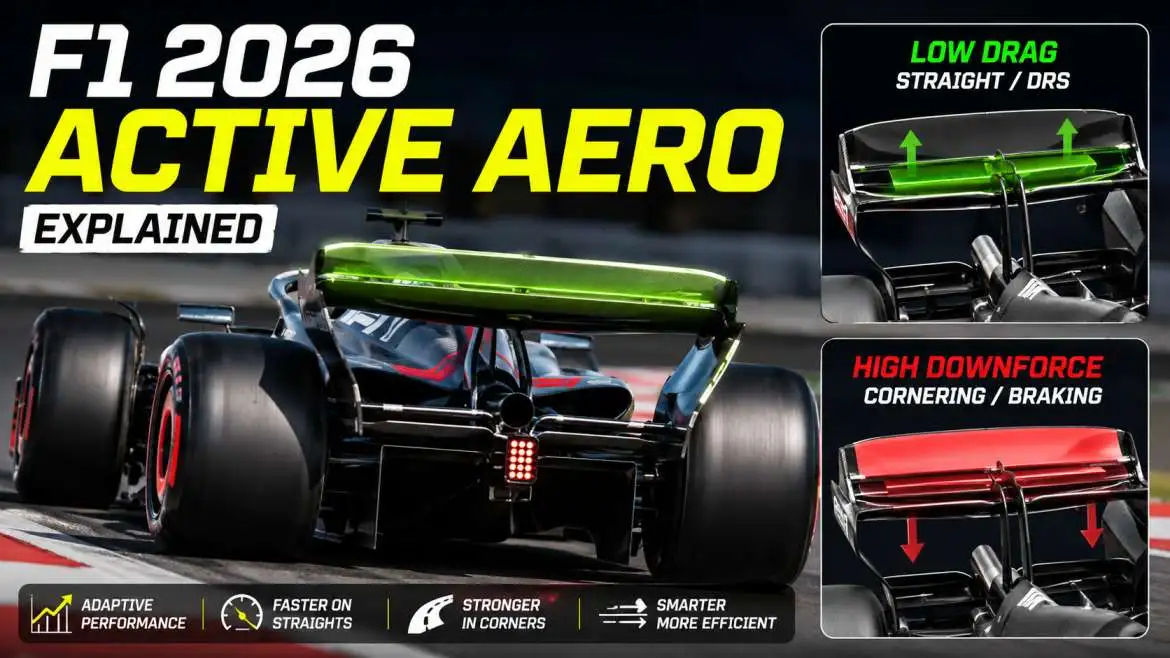

The F1 2026 active aero explained in simple terms means the front and rear wings move automatically on straight lines and corners. On straights, the wings go flat to reduce drag and increase speed. On corners, the wings go steep to add downforce and grip. This replaces the old DRS system. It works with a new engine and a special overtake mode. Every driver gets the same wing benefit on every straight zone.
F1 2026 Active Aero Explained in Simple Words
What Does Active Aero Mean for a Race Car
F1 2026 active aero explained starts with two words: moving wings. A normal car has fixed wings. An F1 car from 2026 does not. The front wing has flaps that move. The rear wing has a flap that moves. These flaps change angle based on where the car is on the track.
Imagine a bird flying. A bird flattens its wings to go fast. A bird tilts its wings to turn. The new F1 car does the same thing. The wings become flat on the straight line. The wings become steep in the corner. That is the whole idea. Simple. Clean. Effective.
The Two Modes Every Driver Uses Every Lap
The system has only two modes. Straight mode happens on long flat parts of the track. The front wing flaps go down. The rear wing flap goes down. The car becomes slippery. Air flows over the top without pushing back. The car reaches high speed without using too much engine power.
Corner mode happens when the car enters a turn. The front wing flaps go up. The rear wing flap goes up. The wings catch the air. The air pushes the car down. The tires get heavy grip. The driver can turn the car at high speed without sliding off.
The car switches between these two modes automatically. The driver just drives. The car handles the wings.
You may also read :- 2026 F1 Calendar: Full Race Schedule & Dates
F1 2026 Active Aero Rules Explained for New Fans
Where and When the Wings Can Move?
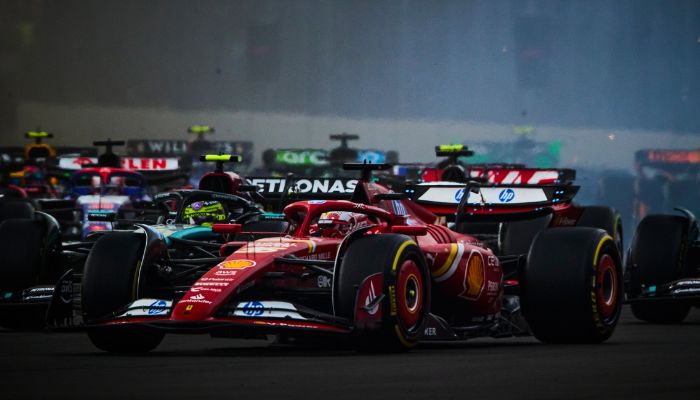
The F1 2026 active aero rules explained clearly say the wings can only change shape in certain zones. These are called F1 active aero zones. The race organizers mark these zones on every track. A zone is usually a long straight line. When the car enters the zone, the wings go flat. When the car leaves the zone, the wings go steep again.
The driver cannot use straight mode on a corner. That would be dangerous. The car would lose grip and crash. So the car has a map of the track. The map tells the car where each zone starts and ends. This keeps the driver safe.
No More One Second Rule for Wing Changes
The old DRS system had a one second rule. You could only open your rear wing if you were less than one second behind the car ahead. That rule is gone. F1 2026 active aero rules explained show that every car gets straight mode in every zone. The leading car gets it. The middle car gets it. The last car gets it. Everyone gets the same benefit.
This makes the racing more fair. In the past, the chasing car had a big advantage. Now both cars have the same wing position on the straight. The driver behind must use overtake mode to pass. That is a different tool. We will talk about that next.
Overtake Mode F1 2026 – The New Way to Pass
How the Driver Gets a Burst of Speed?
If both cars have flat wings on the straight, how does anyone pass? The answer is Overtake Mode F1 2026. This is not about the wings. This is about the engine. The driver presses a button on the steering wheel. The car then sends extra electrical power from the battery to the wheels. The car jumps forward with more speed for a few seconds.
Think of it like a turbo boost in a video game. You have a limited amount. You use it at the right moment to get alongside the other car. Then you complete the pass.
Why Drivers Cannot Use Overtake Mode All the Time?
The battery has a small amount of stored energy. The driver gets a limited number of overtake mode uses per lap. If he uses them all early in the race, the battery goes empty. Then the car becomes slow. The driver cannot defend his position. He cannot attack either.
So the driver must think carefully. He saves overtake mode for the best chance. He uses it on the longest straight. He uses it when he is already close to the car ahead. Good drivers will master this skill. Bad drivers will run out of battery and fall back.
Expert Quote: "Overtake mode changes the game completely," says former F1 engineer Robert Taylor. "The driver who manages his battery best will win more races. It is not just about bravery in the corner anymore. It is about smart energy use."
Active Aero F1 – How It Differs From Old DRS
DRS Only Opened the Rear Wing
Let us look back at the old system. Active aero F1 today is not the same as DRS from last year. DRS only opened the rear wing flap. The front wing did not move. The driver had to push a button. He could only open the wing in special DRS zones. He also had to be within one second of the car ahead. That was a lot of rules just to open a wing.
Active Aero Moves Both Wings Together
The new system moves both wings at the same time. The front wing flaps go down. The rear wing flap goes down. Everything moves together. The car stays balanced. The driver does not feel a sudden change in grip. The transition is smooth. This makes the car easier to drive at the limit.
Also, the driver does nothing. The car reads the track position. It reads the speed. It moves the wings automatically. This lets the driver keep both hands on the wheel. He focuses on braking points and corner entry. The car handles the rest.
My Opinion: I think this is much better than DRS. DRS always felt like a fake passing tool. Active aero feels like a real part of the car. It works with the engine. It works with the battery. It is a complete system, not a band aid.
New F1 Regulations: 2026 Engine Powers the Whole System
Why the Engine Needs the Wings to Move
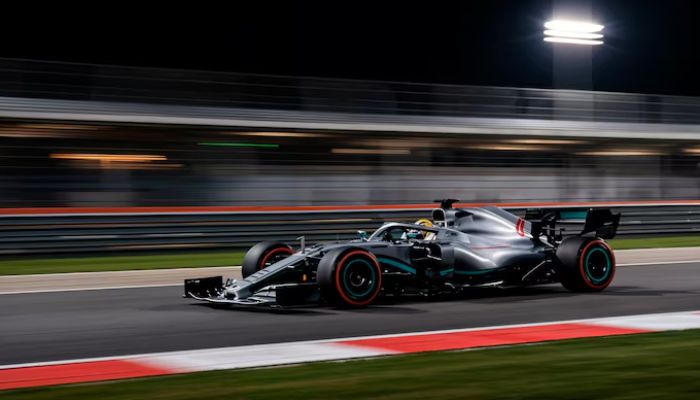
You cannot talk about active aero without talking about the New F1 regulations 2026 engine. This engine is different from any F1 engine before. It has a small fuel engine and a big electrical motor. The electrical motor gets power from a battery. The battery charges when the driver brakes.
Here is the problem. The battery drains quickly on a straight line. The car wants to go fast, but going fast uses electricity. To save electricity, the car needs less drag. That is why the wings go flat on the straight. Less drag means less electricity used. The battery stays fuller for longer.
How the Engine and Wings Work Together on Corners
On a corner, the car needs to charge the battery. Braking charges the battery. But braking slows the car down. The driver does not want to lose too much speed. So the wings go steep. The steep wings push the car into the track. The car gets more grip. With more grip, the driver can brake later and harder. Later and harder braking puts more energy back into the battery.
The wings and the engine are partners. One helps the other. That is the genius of the New F1 regulations 2026 engine. The rules were written to make the whole car work as one machine, not separate parts.
F1 Active Aero Zones – The Map of Overtaking
How Many Zones on a Typical Track
F1 active aero zones are the places where the wings go flat. Most tracks have between two and four zones. A track with two long straights will have two zones. A track with three straights will have three zones. The rule makers decide before each race. They look at the track layout. They choose the parts where straight mode is safe and useful.
Why Zones Are Important for Close Racing
The zones make sure drivers do not use straight mode in dangerous places. A fast corner with a small straight is not a zone. A curved straight is not a zone. Only the clear, safe, long straight lines become zones. This keeps the racing hard but safe.
The teams get a map before the race weekend. They program the car with the zone locations. The driver knows exactly where the car will switch modes. He can plan his overtake mode use around the zones.
Understanding Z-Mode and X-Mode
The heart of the active aero F1 system relies on two driver-selected configurations. These are called Z-Mode and X-Mode. Engineers designed these configurations to maximize performance across different sections of a race track.
High Downforce in Z-Mode
Drivers will use Z-Mode when they enter a braking zone and drive through corners. In Z-Mode, the flaps on the front and rear wings open up to their maximum angles. This action catches the wind and forces the car downward. The extra pressure gives the tires maximum grip, which lets drivers carry massive speed through tight bends.
Low Drag in X-Mode
Once a driver exits a corner and enters a straightaway, they will trigger X-Mode. In X-Mode, the wing elements flatten out. The air slips over the bodywork with very little resistance. This drop in drag allows the car to reach incredible top speeds without burning through excessive energy.
Will Active Aero Make Racing Better?
My Honest Prediction: Yes, but not right away. The first few races of 2026 will look messy. Drivers will make mistakes with overtake mode. Teams will not understand the battery management fully. But after five or six races, the good teams will figure it out. Then we will see close racing from start to finish.
The old DRS often made passing too easy. The car behind would fly past on the straight. That was not real racing. Active aero plus overtake mode will make passing harder. The driver behind must work for it. He must set up the pass over two or three corners. He must save his battery. He must choose the right moment. That is real racing.
Final Thoughts From an Expert
I have followed F1 for many years. I have seen good rules and bad rules. F1 2026 active aero explained is a good rule. It replaces a fake overtaking tool with a smart energy system. It makes the driver think about battery management. It gives every car the same wing benefit on the straights. It connects the wings, the engine, and the driver into one working team.
The first race of 2026 will be a learning experience. But by the middle of the season, fans will forget DRS ever existed. They will watch drivers fight over overtake mode usage. They will see cars switch wing modes automatically on every straight and every corner. That is the future of F1. And that future starts now.
Frequently Asked Questions
Q1: Does the driver control active aero with a button?
No. The car controls active aero automatically based on track position and speed. The driver only controls overtake mode with a button.
Q2: Can the active aero wings break during a race?
Yes, but it is rare. The wings are made of strong carbon fiber. The moving parts are tested for thousands of miles. A crash or a piece of debris could break a wing.
Q3: Is active aero the same as DRS?
No. DRS only opened the rear wing for the chasing car. Active aero moves both wings for every car on every straight zone.
Q4: How many times can a driver use overtake mode per lap?
The exact number depends on the track and the battery size. Most drivers will get two to four uses per lap. Using it more than that drains the battery completely.
Q5: Will the 2026 cars be faster than current F1 cars?
On a straight line, the top speed will be similar. In corners, the new cars will be faster because the wings can add more downforce in corner mode.
.webp)