How Indycar Fuel Saving Strategy Wins Races
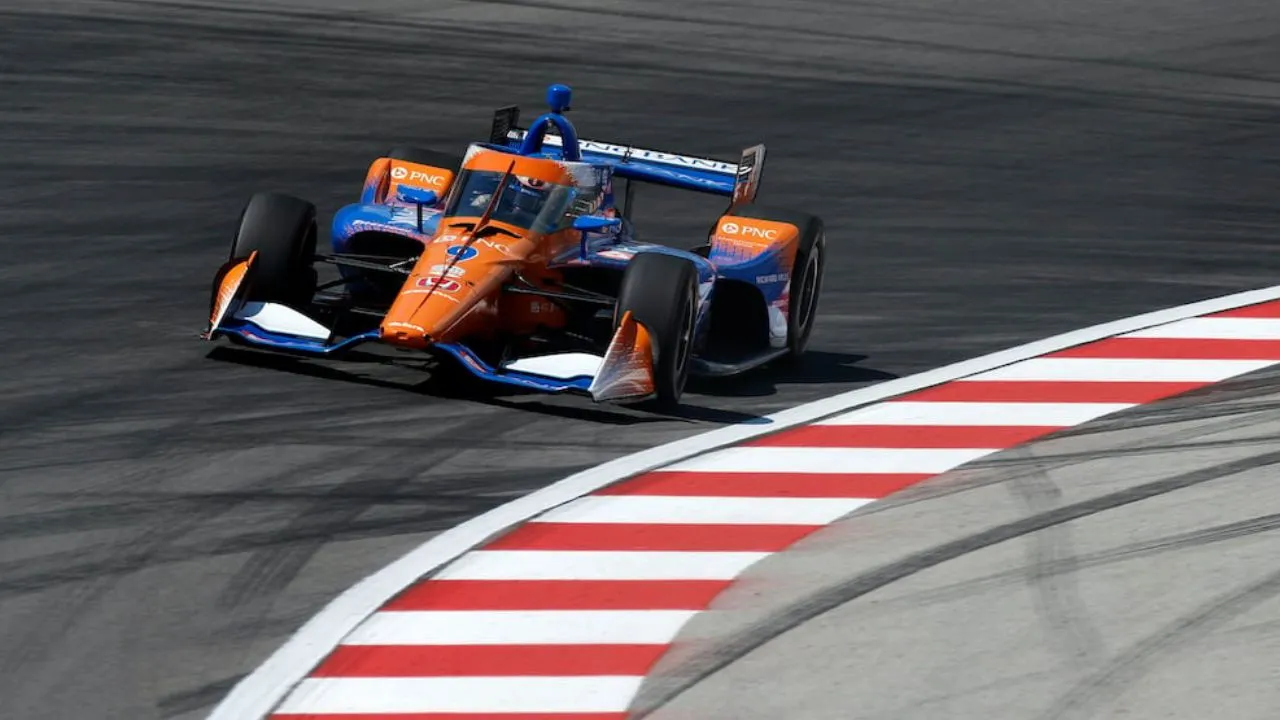

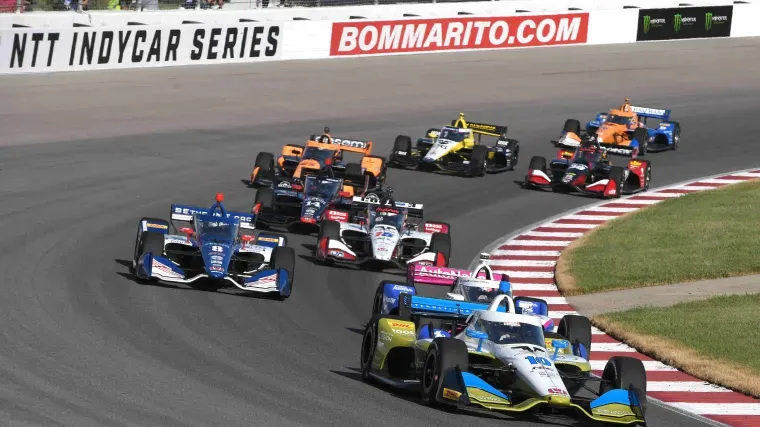


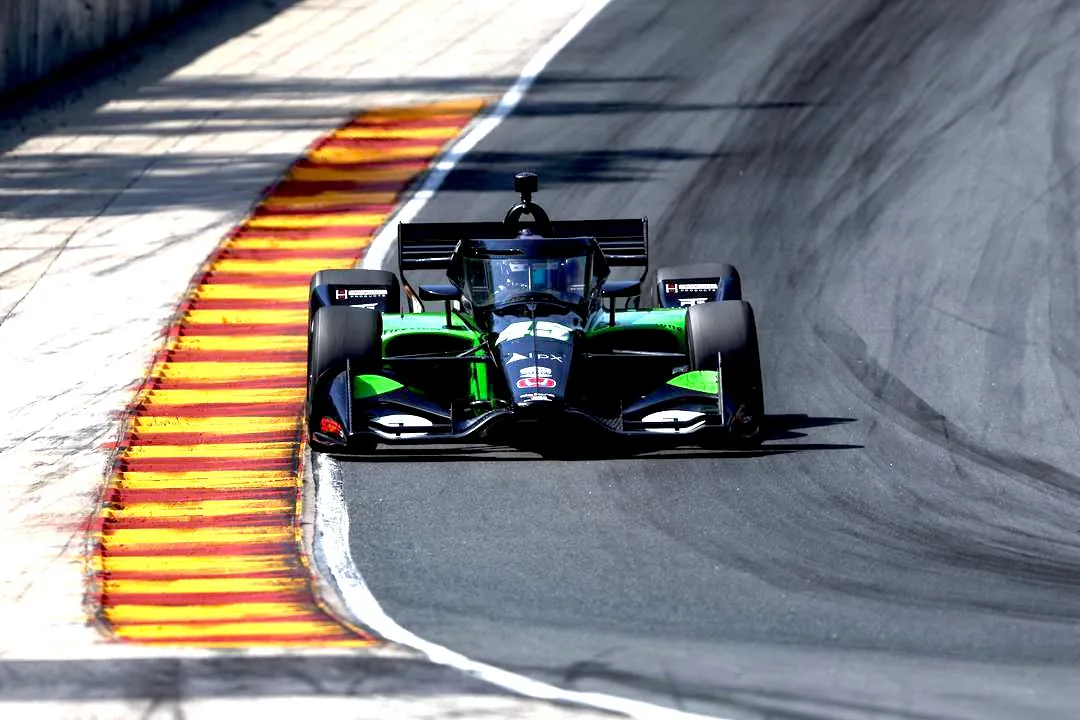
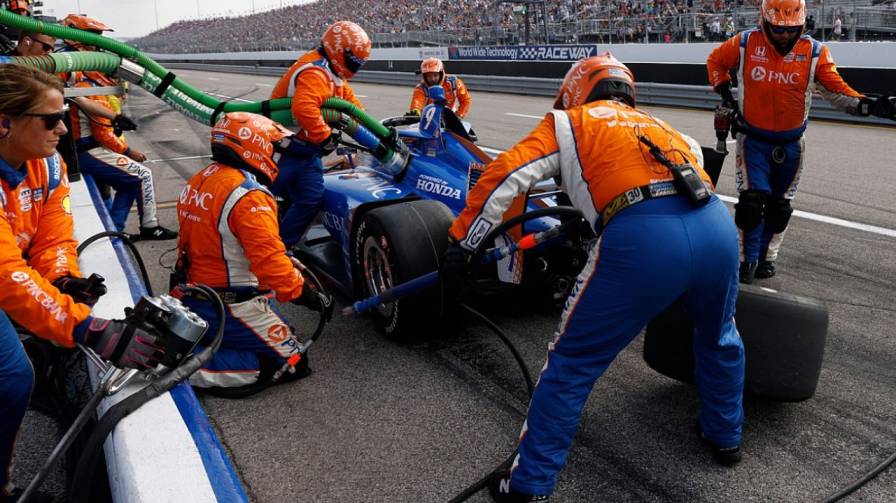
When a driver saves fuel during an IndyCar race, they are not just driving slower. They are executing a precise strategy that trades a small amount of lap time now for a larger advantage later. The goal is simple: skip a pit stop. Every pit stop costs roughly 35 seconds of track time . If a driver can save enough fuel to avoid one stop, they gain a massive advantage over rivals who have to pit.
But here is the catch. Saving fuel costs lap time. The entire game is about losing less time than the pit stop would cost. A driver who saves fuel efficiently might lose only a few seconds across a whole stint. A driver who saves fuel poorly might lose more time than the pit stop itself. The difference between these two outcomes decides races.
The Two Levers Every Driver Uses
IndyCar drivers have only two ways to save fuel. Both require precision and both come with indycar fuel saving strategy.
Engine Modes. Every IndyCar has a dial on the steering wheel that controls the fuel mixture . The driver can switch between full power and leaner settings. A leaner mode reduces power slightly but saves fuel. According to RACER, one mode offers a 4% power reduction for a 5% fuel savings, while another gives an 8% power reduction for 9% fuel savings . The trade-off seems small, but over a full stint, those percentages add up.
Lift and Coast. This is the technique you can hear on the broadcast. Instead of staying on the throttle until the last possible moment before braking, the driver lifts off the gas early and lets the car coast for a stretch. Every foot of coasting is a foot where the engine is not burning fuel . The hard part is not saving fuel. Anyone can save fuel by driving slowly. The hard part is saving fuel without losing too much lap time. That is where the great ones stand out.
The Math Behind Every Fuel Decision
Understanding IndyCar fuel strategy requires understanding a few key numbers.
Every IndyCar carries the same 18.5 gallons of fuel. No team gets a bigger tank . A flat-out lap might burn about 0.74 gallons. That means a driver pushing at full speed would run dry after roughly 25 laps . To stretch the same tank to 33 or 34 laps, the driver needs to average about 0.55 gallons per lap .
Now weigh the trade-off. Skipping a pit stop saves about 35 seconds . The question becomes whether all that lifting and coasting costs less than 35 seconds across the entire race. If it does, the driver who looked slower on track wins. If it does not, the driver who pushed hard and stopped an extra time drives away.
This is the argument you hear on team radios all afternoon. Strategists run simulations and calculate fuel targets for every stint. Drivers then have to hit those targets without losing too much pace.
Read Also: IndyCar Specifications Explained: Weight, Engine, Top Speed and Dimensions
Why Lap Time Loss Is Smaller Than You Think?
Many fans assume that saving fuel means driving much slower. The data tells a different story.
RACER published a detailed simulation showing how different fuel-saving approaches compare . In one example, a driver using full power mode with 135 feet of lift and coast was only 0.02 seconds slower than pushing flat-out. That tiny loss came while using 5% less fuel . Meanwhile, another approach using a leaner engine mode without any lift and coast was 0.23 seconds slower than the first method .
The lesson is clear. When done efficiently, fuel saving can cost almost nothing in lap time. But efficiency depends on where and how the driver lifts.
Where Drivers Lift and Why It Matters
Not all corners are equal when it comes to saving fuel. The best places to lift are corners with high entry speeds and big braking zones . Long straights that end in heavy braking are perfect. A driver can lift early, coast for a stretch, and still carry enough speed into the corner.
Tracks with short straights and flowing corners are different. At a track like Barber, lift and coast does not work as well . Drivers there rely more on engine modes to save fuel.
This is why fuel strategy changes from track to track. What works at Nashville might fail at Mid-Ohio. Teams spend weeks before each race running simulations to find the best approach.
The Simulation Work Behind the Scenes
Before a race weekend even begins, teams have already run hundreds of thousands of simulations. Engineers create theoretical laps for every possible combination of lift and coast distances in every corner . One example from RACER involved 16,807 different lap combinations for a single fuel target . The fastest approach that hits the fuel number becomes the target.
This work happens weeks in advance. Teams must be prepared for all possible scenarios. Safety cars, traffic, tire wear, and weather all change the fuel equation. The simulations give strategists a baseline to work from when conditions change.
The Yellow Flag Factor
Full-course yellows transform fuel strategy. When the yellow comes out, the pit lane closes until the field is grouped together . Once it opens, teams can pit without losing as much track position. A driver who needs fuel can stop under yellow and rejoin in a much better position than if they had stopped under green.
This creates a powerful incentive. Teams will sometimes run a driver long on fuel, hoping for a yellow to appear. If it does, they gain a massive advantage. If it does not, they have to pit under green and lose more time.
Scott Dixon's win at Mid-Ohio in 2025 showed this perfectly. Dixon and his team planned a two-stop strategy, knowing they would need caution laps to make it work . A caution came on the very first lap. Dixon said afterward that as soon as he saw it, he knew the two-stop was on . He then used his fuel-saving skill to stretch his stints and make the strategy work.
The opposite risk is equally real. If a driver enters the pits just as a yellow comes out, the pit lane closes and they face a severe penalty . They must drive through the pit lane and lose track position. This penalty is so harsh that on road and street courses, teams will try to pit as early as possible within the pit window to avoid being caught out .
Why IndyCar Strategy Is Different from Formula 1?
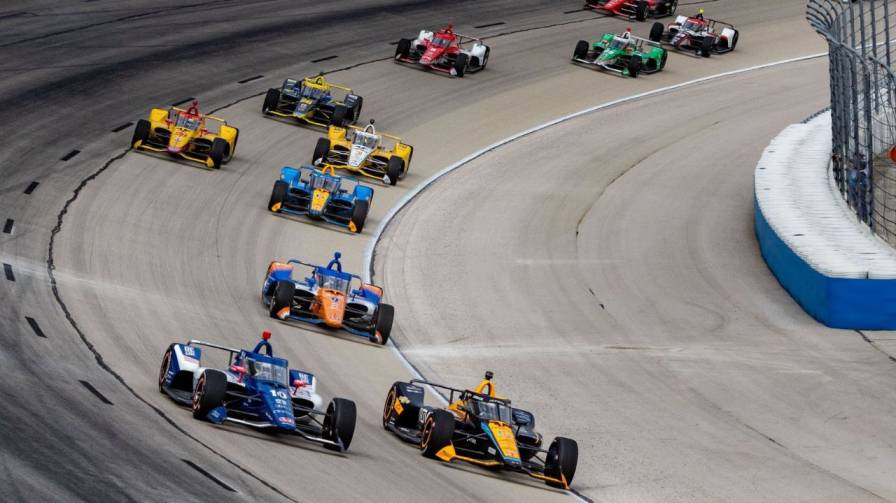
The biggest difference between IndyCar and Formula 1 strategy is refueling. IndyCar allows it. Formula 1 banned it . This single rule changes everything.
In Formula 1, strategy revolves around tire management. In IndyCar, fuel consumption and caution periods drive the strategy . A driver who can save fuel gains flexibility. They can extend a stint, skip a stop, or take advantage of a yellow. A driver who burns too much fuel loses options and becomes predictable.
This is why drivers like Scott Dixon have built reputations as fuel-saving masters. Dixon has won multiple races through fuel strategy, including Long Beach in 2024 and Mid-Ohio in 2025 . Even his own teammate Alex Palou admitted he did not know how Dixon saved that much fuel, despite working with the same team and seeing the same data .
You May Also Like: Top IndyCar Racing Tracks and Circuits in the US 2025 Guide
What Makes a Great Fuel Saver?
Saving fuel is not about driving slowly. It is about driving precisely. The best fuel savers share a few traits.
They understand the cost of every action. They know exactly how much fuel they save by lifting 50 feet earlier at a specific corner. They know how much lap time that lift costs. They make these calculations constantly, adjusting as conditions change.
They are patient. Saving fuel means resisting the urge to push when rivals are closing in. It means trusting the strategy even when it feels slow.
They work closely with their engineers. Fuel saving is a team effort. The driver hits the numbers, but the strategist decides what numbers to hit. The best driver-strategist combinations become nearly unbeatable in fuel-saving races.
The Bottom Line
IndyCar fuel saving strategy is a math problem disguised as a race. Every tank of fuel contains a limited number of laps. Every pit stop costs 35 seconds. The driver who finds the best balance between saving fuel and maintaining speed wins.



.webp)