IndyCar Specifications Explained: Weight, Engine, Top Speed and Dimensions
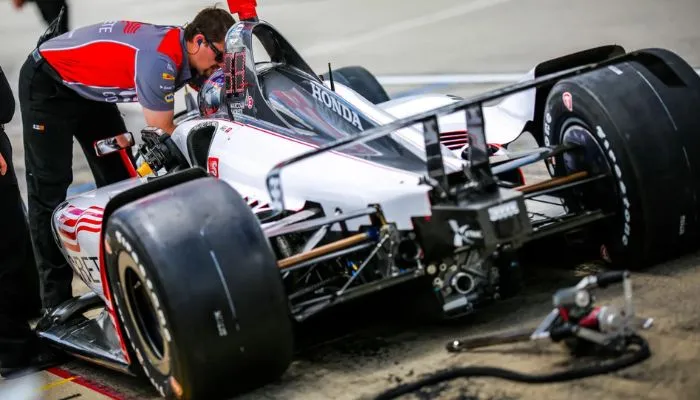
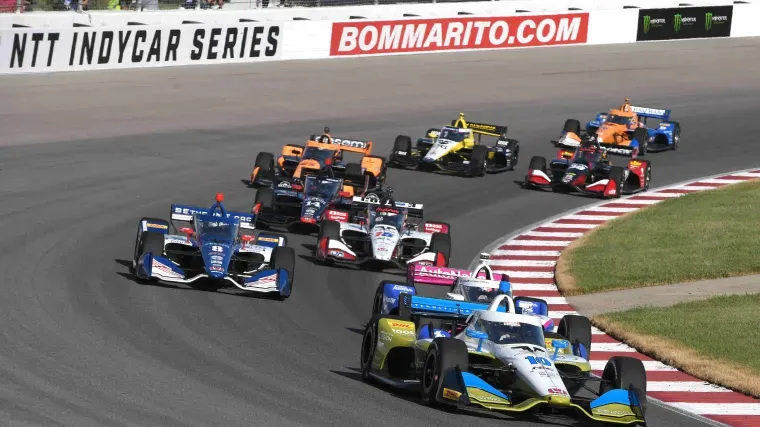


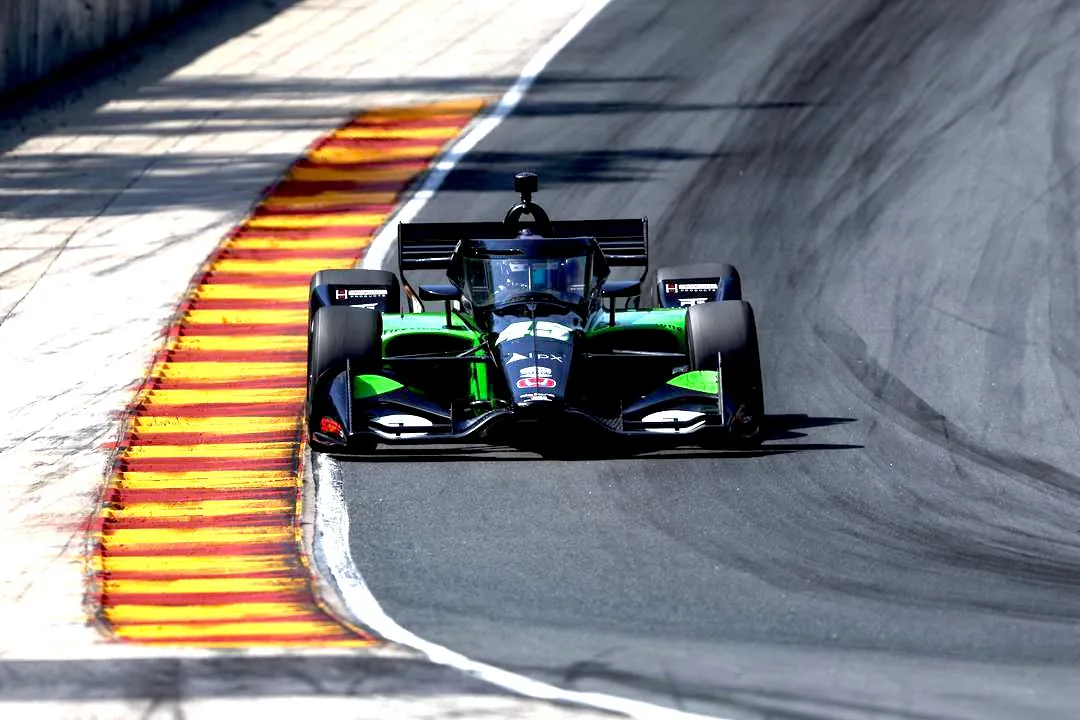
If you've ever wondered what makes an IndyCar race car so special, you are in the right place! The IndyCar car specifications feature a complete blend of power, ingenuity, and state-of-the-art technology. The engines in today's cars are 2.2-liter twin-turbocharged V6s capable of delivering more than 700 horsepower. They also have a new hybrid system for added power. The chassis is a carbon fiber standard Dallara. This ensures all teams are playing with the same "rules.
These machines can reach a speed in excess of 230 miles per hour on oval tracks. Each and every component is created to achieve a single objective – the quickest, safest and most thrilling race car on earth.
IndyCar Engine and Powertrain
The engine is the most important part of any race car. It is the heart that gives the machine life. For IndyCar race car specs, the engine rules are strict. This keeps the racing close and exciting.
You may also read :- IndyCar Hybrid System: Specs, Horsepower & Engineering Breakdown
Indy Car Engines 2026: The Current Powerhouses
When we talk about Indy car engines 2026, we are looking at two amazing pieces of engineering. The series only uses engines from two manufacturers: Chevrolet and Honda. Both follow the same rules. This creates a fair fight on the track.
Chevrolet's Engine
The Chevy engine is a 2.2-liter twin-turbocharged V6. It uses direct fuel injection and runs on E85 ethanol fuel. It can spin up to 12,000 rpm . This small but mighty engine makes around 735 horsepower. It weighs just 248 pounds . That is lighter than many motorcycles!
Honda's Engine
Honda calls its engine the HI22TT. It is also a 2.2-liter twin-turbo V6 . Honda uses the same basic rules. It has dual overhead camshafts and four valves per cylinder. The engine is a stressed member of the chassis. This means it helps hold the car together. It weighs about 250 pounds .
INDYCAR Horsepower 2026: More Than Just a Number
Horsepower is what gets the car moving fast. INDYCAR horsepower 2026 is all about the new hybrid system. The V6 engine alone makes about 700-735 horsepower. But the new hybrid system adds an extra punch.
The hybrid system is like a battery booster. It uses a motor generator unit (MGU) and a supercapacitor. This captures energy when the driver brakes. The driver can then release this energy for a big speed boost .
Key Power Numbers:
- V6 Engine Power: Around 700-735 hp .
- Hybrid Power Boost: Up to 60 extra hp .
- Push-to-Pass Boost: Adds another 50-60 hp on road and street courses .
- Total Power: Combined, the car can reach over 800 hp .
This hybrid power is a game-changer. It gives the drivers more tools to overtake. It also makes the racing better. In 2024, the hybrid system helped set new passing records at several tracks .
IndyCar Engine vs F1: A Friendly Comparison
Many fans want to know about the IndyCar engine vs F1 battle. Both are incredible, but they are quite different.
- Engine Size: IndyCar uses a 2.2-liter V6. F1 uses a smaller 1.6-liter V6 .
- Power: IndyCar makes about 700-800 hp. F1 cars make over 1,000 hp .
- Hybrid: IndyCar has a simple 60hp boost system. F1 has a very complex, powerful hybrid system .
- Cost: IndyCar engines cost much less to build and run. F1 engines are extremely expensive. This is a big difference .
- Top Speed: IndyCar has a higher top speed on ovals (over 230 mph). F1 cars are faster on road courses because they have more downforce .
An expert, Mark Sibla from IndyCar, explains the 2028 plan: "The 2.4 allows us to bring down the stress that the engines are under, which also helps a bit from the cost perspective" . This shows how IndyCar balances performance with smart spending.
The Future is Here: The 2028 Engine Evolution
IndyCar is already planning for the future. The current 2.2-liter engine is great. But in 2028, a new era begins . The cars will get a brand-new 2.4-liter twin-turbo V6 engine. This bigger engine will make more power. It will also be more reliable.
Key Changes for 2028:
- Larger Engine: 2.4 liters instead of 2.2 liters .
- More Power: The engine and hybrid together will make almost 900 hp .
- Lighter Car: The new car will be 85-100 pounds lighter .
- Better Hybrid: The hybrid system will be improved with more power and longer deployment .
The new engine will still be a twin-turbo V6. It will keep the push-to-pass and hybrid systems. But it will be a big step forward in IndyCar technology.
The Bones of the Beast: IndyCar Chassis and Design
The engine gives the car power. But the chassis is the skeleton. It holds everything together. It keeps the driver safe. It also shapes the car's speed.
Chassis Details: The Dallara IR-18
Every IndyCar uses the same chassis. This is a standard "spec" design. It is made by an Italian company called Dallara. The current chassis is called the Dallara IR-18 .
IndyCar chassis details are what make the car unique. Here are the key facts:
- Materials: The chassis is made from carbon fiber, Kevlar, and other light composites .
- Design: It is a monocoque. This means the driver's cockpit and fuel cell are built into the main body. This makes the car very strong and safe .
- Engine as Structure: The engine is a stressed member. This means it is bolted to the chassis and helps hold the back of the car together .
- Safety: The car has a strong roll hoop and the aeroscreen. The aeroscreen is a polycarbonate shield that protects the driver's head .
Chassis Dimensions :
- Weight: The car weighs about 1620 pounds on road courses. It is a bit lighter (1590 pounds) on speedways .
- Length: About 201.7 inches.
- Height: About 40 inches.
- Width: This changes based on the track. It is a minimum of 75.5 inches for road courses and up to 76.5 inches for ovals .
- Wheelbase: Teams can adjust the distance between the wheels. It ranges from 117.5 inches to 121.5 inches .
Suspension and Brakes
The car's ability to turn and stop is just as important as its speed.
- Suspension: The car uses a double wishbone system . This gives the engineer many ways to tune the car. They can adjust the ride height, camber, and toe. The anti-roll bars are also driver-adjustable. This helps with the car's handling during the race.
- Brakes: The brakes are incredible. They use carbon-carbon discs . These brakes can handle the intense heat of stopping from over 200 mph. The calipers are made from a single piece of aluminum. This makes them light and strong.
Tires: The Only Connection to the Track
The tires are the only part of the car that touches the track. Firestone is the exclusive tire supplier for IndyCar . They make different tires for different tracks.
- Road and Street Courses: Firestone provides two types. The primary tire (black sidewall) is more durable. The alternate tire (red sidewall) is softer and gives more grip. But it wears out faster. Teams must use both types during the race .
- Ovals: The tires are specially made for each oval track. They are built to handle speeds over 230 mph and heavy cornering loads .
- Rain Tires: For wet weather, Firestone provides rain tires with a special tread pattern .
IndyCar Technology: A Masterclass in Innovation
IndyCar technology is not just about raw speed. It is about smart, clever solutions. The series uses a mix of old-school racing and cutting-edge technology.
The Hybrid System Explained
The new hybrid system is a huge step forward. It is a low-voltage (48V) system. It fits inside the bellhousing between the engine and the gearbox . This is what makes the INDYCAR horsepower 2026 so impressive.
The system has two main parts:
- Motor Generator Unit (MGU): This part is made by Chevrolet/Ilmor . It captures energy when the car brakes or decelerates.
- Energy Storage System (ESS): This is a series of 20 supercapacitors made by Honda . It stores the energy that the MGU captures.
When the driver wants to use the extra power, they press a button on the steering wheel. The energy is sent from the ESS back to the MGU. This gives the driver a 60-horsepower boost . The whole system charges and deploys in about 4.5 seconds .
Aero Configurations for Different Tracks
IndyCar races on many different types of tracks. The series has three main aero configurations.
- Road and Street Courses: These tracks have tight corners. The cars use a high-downforce setup . This gives the car more grip in the corners. The front and rear wings are larger.
- Short Ovals: These are smaller oval tracks. The car needs a balance between grip and straight-line speed. The aero package is a mix of the road course and superspeedway setups .
- Superspeedways: These are the biggest tracks. Think of the Indianapolis Motor Speedway. The cars use a low-downforce setup . The wings are smaller. This reduces drag and allows for higher top speeds.
The Aeroscreen: A Safety Revolution
The aeroscreen is one of the most important safety devices in motorsport. It was introduced in 2020. It was developed with the help of Red Bull Advanced Technologies .
The aeroscreen is a polycarbonate windscreen. It is surrounded by a strong titanium frame. It protects the driver's head from debris and impacts . It has already been credited with preventing serious injuries. It is a defining feature of the modern IndyCar.
IndyCar Specifications Summary
| Feature | Specification |
|---|---|
| Engine | 2.2L Twin-Turbocharged V6 |
| Engine Suppliers | Chevrolet, Honda |
| Engine Power | 700-735 hp (Engine) + 60 hp (Hybrid) + 50 hp (Push-to-Pass) |
| Engine Weight | ~248-250 lbs |
| Max RPM | 12,000 rpm |
| Chassis | Dallara IR-18 |
| Car Weight | ~1590-1620 lbs |
| Transmission | 6-speed Sequential Xtrac |
| Fuel | Sunoco E85 Ethanol |
| Tires | Firestone Firehawk |
| Top Speed | >230 mph |
| New Engine (2028) | 2.4L Twin-Turbo V6, ~900 hp |
FAQ
1. What are the key specifications of an IndyCar engine?
The key IndyCar car specifications for the engine are a 2.2-liter, twin-turbocharged V6. It produces over 700 horsepower. It also has a 60-horsepower hybrid system. The engine is a stressed member of the chassis and weighs under 250 pounds .
2. How much horsepower does an IndyCar have in 2026?
The more powerful version of the INDYCAR race is more than 800 hp. The base engine puts out approximately 700-735 hp. The new hybrid system brings with it an additional 60 hp. The push-to-pass system on road courses adds more power to the mix to make the total over 800 hp.
3. How does an IndyCar engine compare to an F1 engine?
Two very different philosophies are being demonstrated in the IndyCar engine vs F1. IndyCar has a 2.2L V6 that makes ~700 hp. F1 has a 1.6L V6 hybrid that makes over 1000 hp. IndyCar cars are made to be less expensive and F1 cars are extreme and expensive technology.
4. What is the chassis of an IndyCar made of?
The IndyCar chassis is a Dallara design. It is made from a strong, lightweight material called carbon fiber. It also uses Kevlar and other composites. This material helps create a very strong monocoque safety cell for the driver .
5. What new technology is coming to IndyCar in 2028?
In 2028, IndyCar will introduce a new chassis and engine. The car will be lighter. The engine will be a bigger 2.4-liter V6. It will combine with the hybrid system for almost 900 horsepower. The new car will also have improved safety features and better aerodynamics .


.webp)