IndyCar Hybrid System: Specs, Horsepower & Engineering Breakdown
.webp)



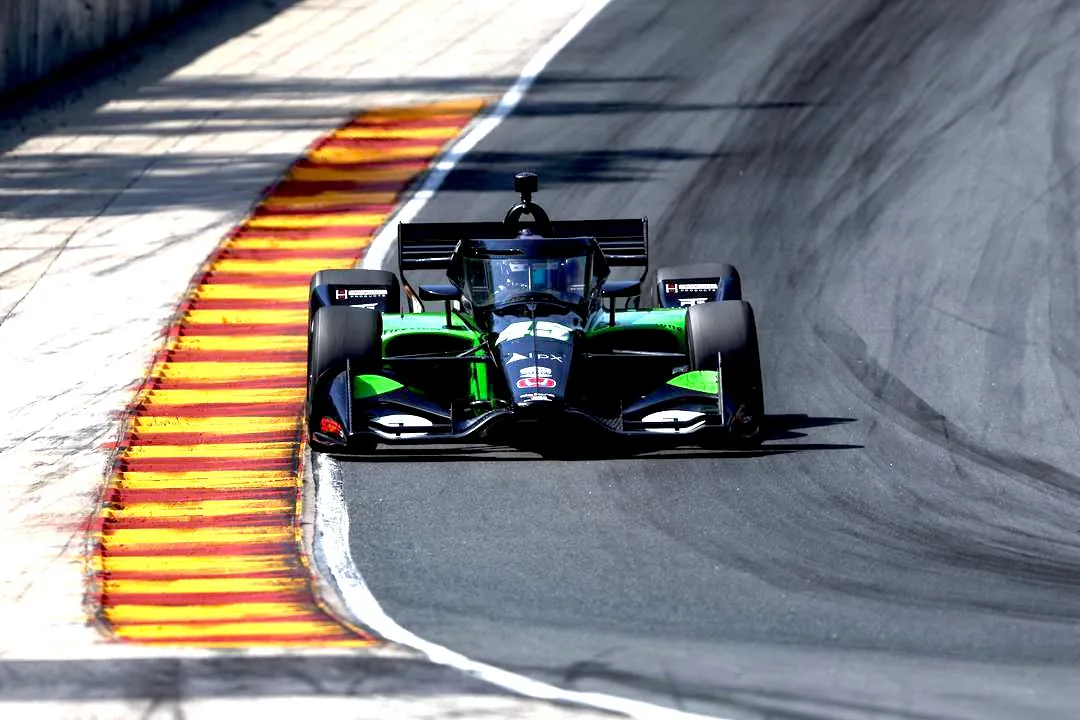
Let’s cut the fluff. When we talk about the IndyCar powertrain, most people just want to know one thing: *How does a 2.2-liter V6 push a brick through the wind at 240mph without exploding?*
But here’s the reality check. The engine is no longer the lone hero. In 2024, the internal combustion beast learned to share the stage with a hybrid unit. And it’s weird. It’s heavy. And it’s changing the very fabric of how teams strategize.
We’ve spent decades watching these cars dance on ovals and knife through street circuits. Today, we aren't just looking at the horsepower figures. We are going under the hood—literally—to look at the engineering friction, the dirty secrets of weight distribution, and why comparing this to F1 is like comparing a sledgehammer to a scalpel.
Key Takeaways (Read This First)
- The Hybrid is a Drag (Literally): The new IndyCar hybrid system adds roughly 120 lbs to the car. That isn't just dead weight; it changes braking points entirely.
- Power vs. Parity: Unlike F1’s complex energy recovery systems, IndyCar keeps it simple: a spec 2.2L V6 twin-turbo pushing ~700hp, plus an extra ~120hp from the hybrid on demand.
- The "Push-to-Pass" Evolution: The hybrid unit replaces the old mechanical system. Now, deployment is instantaneous electric torque. No lag. Just violent shove.
- Heavy is Slow: The IndyCar weight minimum has ballooned. We are seeing a physics fight where cornering speeds are dropping, but exit acceleration is spiking.
You may also read :- Is Indycar Faster Than F1? A Speed and Performance Comparison
The Truth Behind IndyCar Engine Specs
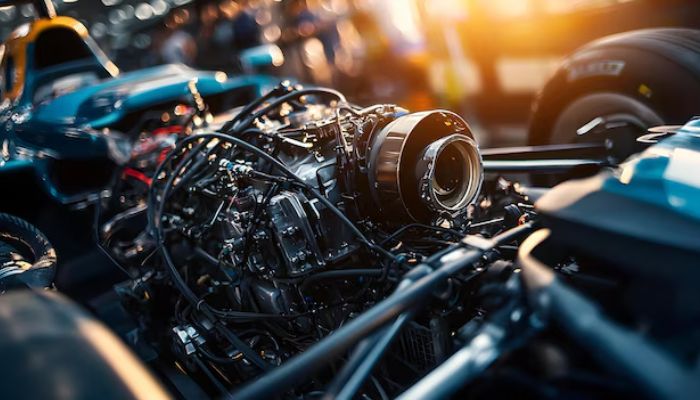
Let’s start with the obvious. You look at an IndyCar engine specs sheet, and you might yawn. 2.2 liters? Your neighbor’s Honda Accord has a 2.0L. But the similarity ends there.
We are dealing with a 60-degree V6, twin-turbocharged, running about 21-24 psi of boost. On a standard race setup, you’re looking at 550-700 horsepower depending on the turbo settings (higher on ovals). But here is the "hot take" nobody tells you:
Raw horsepower is a lie in IndyCar.
It’s not about the peak number. It’s about the drivability. Because these engines are endurance units. They have to survive 500 miles at full tilt. An F1 engine gets rebuilt every weekend. An IndyCar engine has to do 2,500 miles.
Real-World Scenario:
Think about the Indianapolis 500. A driver sits at 230 mph for four seconds in the draft. The engine management system has to cut fuel, manage EGTs (Exhaust Gas Temperatures), and spool turbos simultaneously. If the engine hiccups once? That’s a wall impact at 220mph. In 2023, we saw a Chevy engine suffer a valve train failure at 230mph. The result wasn't a simple "pull over." It was a high-speed spin that collected three cars. That’s the penalty for failure.
Under-the-hood details:
The block is actually a structural member of the car. You can’t just bolt an engine in; the engine is the chassis from the bulkhead to the gearbox bellhousing. This "stressed member" design saves weight, but it transmits every single vibration from the track right into the cam covers. That’s why you see those massive, ugly-looking vibration dampers on the back of the block. They aren't aesthetic. They stop the metal from fatiguing into confetti.
The Hybrid System: The 120lb Elephant in the Room
Let’s talk about the new kid. The IndyCar hybrid system is a spec unit supplied by Mahle, featuring a motor-generator unit (MGU) bolted directly to the bellhousing.
Pro-Tip #1: Forget regenerative braking like your Prius.
In F1, the MGU-K harvests energy under braking heavily. IndyCar’s system is different. It harvests energy under braking, sure, but it’s less aggressive. Why? Because of the ovals.
On an oval, you don't brake hard. You lift. The hybrid unit doesn't harvest well on a lift. So, INDYCAR teams had to learn a new trick: harvesting on the straights. You actually lose a tiny bit of speed to generate electricity. Counter-intuitive, right?
The "Hot Take":
The hybrid system ruins the rhythm of the veterans. We’ve watched drivers who rely on "feel" struggle. Old-school drivers like a loose rear end on corner entry. The hybrid unit adds mass behind the rear axle. That’s 120lbs swinging like a pendulum. Suddenly, the car that used to rotate beautifully now snap-oversteers. You can’t muscle it. You have to anticipate the inertia.
Real-World Scenario (Toronto 2024):
On a wet street course, the hybrid’s instant torque became a curse. A driver, let’s call him "The Veteran," stabbed the throttle coming out of Turn 3. The internal combustion engine has a lag (spool time). The hybrid has zero lag. The result? The electric motor spun the rear tires before the engine could catch up, creating a violent "torque spike." The car high-sided the curb. Race over. That’s the learning curve.
Technical "Under-the-hood":
The MGU spins up to 50,000 rpm. It is oil-cooled, not water-cooled. Look closely at the sidepod vents next time you’re at a race. You’ll see an extra oil cooler just for the hybrid. That is parasitic drag. That oil pump costs you 5 horsepower just to turn. So, the net gain of the hybrid? About 100hp, but you lose 5hp to cooling and 20hp to weight drag. Net-net? It’s a wash on some tracks. But on street circuits? The instant torque wins.
IndyCar vs F1: The Sibling Rivalry No One Wins
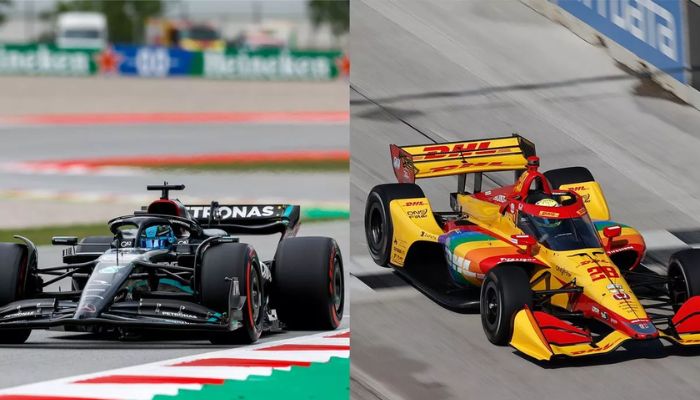
Everyone asks this. "Why isn't IndyCar as fast as F1 on a road course?" Let's settle the IndyCar vs F1 debate once and for all.
If you put an IndyCar and an F1 car on the same track (say, COTA), the F1 car wins by 15 seconds a lap. Easy. But here is the nuance: That’s not the point.
F1 is aerospace engineering. IndyCar is brutalist architecture.
-
Weight: F1 cars weigh ~798kg (1,759 lbs) with driver. IndyCar weight with the new hybrid is ~1,620 lbs without fuel? Wait. Let’s math. The IndyCar weight minimum is now 1,620 lbs (dry) for the chassis alone? No—let me correct that. Current spec: The car weight without fuel is roughly 1,670 lbs (760kg) including the hybrid. F1 is heavier? Yes. F1 cars are heavier because of the battery size.
Wait, hot take: The IndyCar weight distribution is worse. F1 has a low center of gravity because of the floor battery. IndyCar has the hybrid hanging off the back. That "pendulum effect" we mentioned? That’s why IndyCar slides more in slow corners. -
The Engine Specs: F1 is a 1.6L V6 hybrid with incredible MGU-H (heat recovery). IndyCar engine specs lack the MGU-H. That unit in F1 recovers energy from the exhaust turbine. It's 10 million of wizardry.
Pro-Tip #2: Listen to the sound.
F1 screams. IndyCar growls. The lower rev limit and the twin-turbo setup create a bassy, guttural thunder. At Indianapolis, you feel the compression wave in your chest. F1 at Monaco sounds like angry bees. IndyCar at Texas Motor Speedway sounds like God ripping a zipper. That’s the difference in philosophy.
The Real-World Scenario (Long Beach Hairpin):
We watched an F1 driver try an IndyCar. He complained the steering was too heavy. No power steering. He complained the brakes required 150kg of force. In F1, it's servo-assisted. In IndyCar, it’s raw. The F1 driver spun four times. Why? He was used to the F1 hybrid torque curve being "endless." The IndyCar torque curve is a cliff. It peaks early, then flattens. You have to short-shift. F1 drivers over-rev the IndyCar engine and break the valve springs. So no, they aren't the same.
The Weight Penalty: Physics is a Cruel Mistress
We need to talk about the number nobody wants to admit. IndyCar weight has become the enemy of cornering.
Pre-hybrid (2023), the car was a featherweight dancer. Post-hybrid (2024+), the car is a heavyweight boxer. We added roughly 120 pounds. That doesn't sound like a lot. But in racing physics, 120lbs is a massive anchor.
Under-the-hood details:
Let’s look at the unsprung mass. The new energy storage system (ESS) is a capacitor, not a battery. Caps are lighter than batteries, but they are still heavy. That weight is mounted high up in the survival cell.
Why high? Safety. If you hit the wall, you don't want a lithium bomb near the fuel cell. But physics doesn't care about safety. High weight = high center of gravity = more body roll.
The "Hot Take":
The hybrid system makes oval racing worse.
We said it. On a short oval like Iowa, the high IndyCar weight kills the tires faster. The car slides more. The driver has to lift earlier. The racing gets spread out. Promoters won't tell you this, but the "racing product" on ovals has degraded because the cars are too heavy to handle the G-forces for 200 laps without the right rear tire melting.
Real-World Scenario (Gateway 2024):
A mid-pack driver was asked about the "new" heavy car. His quote was priceless: "It feels like the brakes are made of wood and the throttle is a light switch. You just hang on."
Because of the IndyCar weight, the braking zones into Turn 1 at Gateway extended by 15 meters. That’s massive. That’s the difference between a clean pass and a divebomb crash. We saw three red flags because drivers misjudged the inertia. The hybrid didn't just add power; it added stopping distance. Teams forgot to recalibrate the brake bias for the fat rear end.
Pro-Tip #3: Watch the "Push-to-Pass" usage now.
Because the hybrid is the IndyCar hybrid system, teams have 185 seconds of deployment per race (or roughly 10-15 laps of boost). But here's the trick: You can only deploy the 120hp boost if the capacitor is charged. If you use it all on lap 1 to defend, you have no e-boost later. We see rookies using it too early. Veterans save it for the "traction zone" coming out of slow corners to kill the understeer caused by all that damn weight.
How INDYCAR Teams Are Adapting (Or Failing)
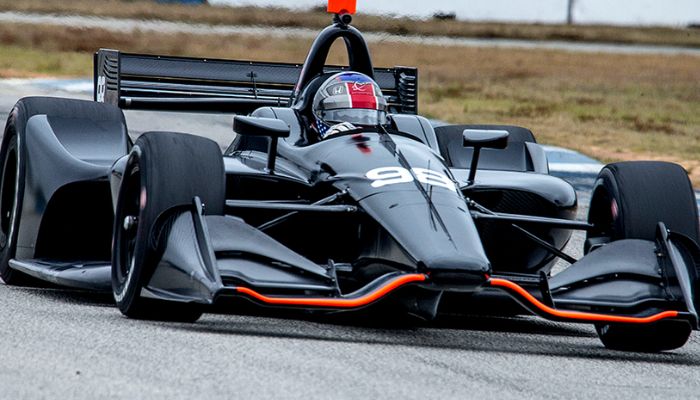
You think it's just the driver? No. The engineers in the paddock are losing sleep. INDYCAR teams are split into two camps: The "Add Damping" camp and the "Change Geometry" camp.
Because of the extra IndyCar weight, the suspension kinematics have gone haywire.
Technical "Under-the-hood":
The pushrod suspension on an IndyCar is designed for a specific mass. Add 120lbs, and the natural frequency of the spring changes. Suddenly, the car is "bottoming out" on the skid block at high speed.
Teams like Ganassi solved this by going stiffer on the rear springs. Stiffer springs mean less mechanical grip. Less mechanical grip means the rear slides. So, they added aero downforce to the rear wing. More downforce means more drag. More drag means lower top speed.
See the cascade of stupidity? Weight = drag = slow.
The "Hot Take":
The veteran INDYCAR teams (Penske, Ganassi) hated the hybrid initially. They lobbied against it. But now? They are dominating because they have the simulation tools. The small teams (Coyne, Foyt) are suffering. They don't have the $2 million rigs to test the weight shift. So, you see a "two-tier" series now. The rich teams understand the pendulum. The poor teams guess and crash.
Real-World Scenario (The Pit Stop):
We timed a pit stop at Barber. Pre-hybrid: 6.5 seconds for fuel and tires. Post-hybrid: 7.2 seconds. Why 0.7 seconds? The IndyCar weight distribution changed. The car sits lower on the rear air jacks now. The fuel hose has to be lifted higher to clear the new hybrid cooling ducts. It’s a tiny ergonomic change, but over a 60-lap race, losing 0.7 seconds per stop (three stops = 2.1 seconds) is the difference between P1 and P5. Teams are literally redesigning air hoses to claw back that time.
The Future of the Powertrain (2027 and Beyond)
Where do we go from here? The current IndyCar powertrain is a stopgap. The real future is 2027. We hear rumors of a 2.4L V8? Or a downsized 4-cylinder?
Don't believe the hype.
Pro-Tip #4: The internal combustion engine isn't going away in IndyCar.
Unlike Formula E, IndyCar knows its audience. The audience wants noise. So, the IndyCar hybrid system will likely become more powerful (think 300hp electric), but the engine will stay V6. The sweet spot is reducing the IndyCar weight of the battery. Solid-state capacitors are coming. When we drop 60lbs from the system, the cornering speeds will return.
The "Hot Take":
IndyCar should ditch road course hybrids and keep ovals pure.
Radical, right? But think about it. The IndyCar weight hurts ovals more. So, run the hybrid on street circuits (where torque is king) and remove the 120lb hybrid unit for the Indianapolis 500. It’s mechanically possible. It would just require two different gearbox housings. But the cost cap prevents it. So, the cars are "jacks of all trades, masters of none." Heavy everywhere.
Under-the-hood details:
The current spec ECU (the Delta Cosworth) has unused pins specifically for future hybrid control. They already planned for a "boost zone" mapping. Right now, the driver presses a button for overtaking. By 2027, we expect the system to be automated. The ECU will decide when to deploy the electric power based on GPS location. It’s scary. Drivers don't want that. They want the button. But the engineers? They love automation.
Frequently Asked Questions
Q: What is the exact horsepower of the current IndyCar powertrain?
A: Approximately 700hp from the internal combustion engine plus 120hp from the hybrid for a total of ~820hp on "Push-to-Pass." On standard running, it’s about 650hp.
Q: How heavy is a 2024 IndyCar with the driver?
A: The minimum IndyCar weight (without fuel) is roughly 1,670 lbs. With the driver (minimum 185 lbs including seat insert) and a full fuel load (~145 lbs), you’re looking at just over 2,000 lbs rolling down the straight.
Q: Does the hybrid system make the car harder to drive?
A: Absolutely. The instant torque from the IndyCar hybrid system induces oversteer on corner exit. Add the extra 120lbs, and the car enters corners like a fridge sliding on ice. It’s physically exhausting.
Q: Why does an IndyCar sound so different from an F1 car?
A: The IndyCar engine specs show a 12,000 rpm rev limit versus F1’s 15,000 rpm. Lower revs = deeper noise. Also, IndyCar uses a traditional exhaust manifold, while F1 uses complex tuned pipes that scream.
Q: Can an F1 car beat an IndyCar at the Indy 500?
A: No. The F1 engine is not built for sustained full throttle. It would overheat in 20 laps. IndyCar vs F1 is apples to hand grenades. F1 is sprinting. IndyCar is marathon boxing.
Q: Which INDYCAR teams have adapted best to the hybrid weight?
A: Team Penske and Chip Ganassi Racing. Their simulation software predicted the pendulum effect of the IndyCar weight shift six months early. Small teams like Dale Coyne Racing are still struggling to find the setup sweet spot.


.webp)